
































































































































































































































































































































































































































































































































































































































































































































































































































































































































































































































































































The B2B Influencer Marketing Software You Need to Succeed in 2026
For years, influencer marketing was almost exclusively associated with fashion brands, beauty products, travel creators, and lifestyle content on Instagram and YouTube. The assumption was simple: influencer marketing was designed for consumers, not businesses. That perception has changed dramatically.
Today, some of the world’s largest B2B organizations—including software companies, cloud providers, cybersecurity firms, consulting agencies, and enterprise technology vendors—have made influencer marketing a central part of their demand generation and brand awareness strategies. The difference is that B2B influencer marketing looks very different from its consumer-focused counterpart.
A B2B influencer is rarely someone posting sponsored skincare routines or travel reels. Instead, they’re industry analysts, respected consultants, LinkedIn creators, podcast hosts, authors, keynote speakers, engineers, founders, researchers, and subject matter experts whose opinions influence purchasing decisions. Their audiences may be smaller than those of consumer influencers, but they’re often far more valuable. One recommendation from a trusted cybersecurity expert or SaaS consultant can influence a buying committee responsible for a six- or seven-figure purchasing decision.
Why B2B Influencer Marketing Is More Complex Than B2C
At first glance, influencer marketing appears to follow the same principles regardless of industry. Brands identify creators, collaborate on content, publish campaigns, and measure results. In reality, B2B marketing introduces an entirely different level of complexity.
Consumer purchases are often emotional and immediate. Someone might discover a product on TikTok and complete a purchase within minutes. B2B buying journeys rarely work that way. Decisions often involve multiple stakeholders, extended evaluation periods, procurement processes, legal approvals, and technical reviews. A campaign that begins today may not generate measurable revenue for six months or even a year.
This longer buying cycle means marketers must evaluate success differently. Engagement still matters, but metrics such as qualified leads, webinar registrations, content downloads, product demos, and pipeline contribution become far more meaningful than likes or impressions.
Because of these differences, software designed primarily for consumer influencer campaigns may fail to address the unique requirements of B2B organizations.
What B2B Influencer Marketing Software Actually Does
Many people assume influencer marketing software is simply a searchable database of creators. Modern platforms are considerably more sophisticated.
The right software acts as the operational backbone of an entire influencer program. It helps marketing teams identify relevant industry experts, evaluate audience quality, organize outreach, manage ongoing relationships, coordinate campaigns, monitor published content, and analyze performance through detailed reporting dashboards.
Rather than replacing human relationships, the software supports them by eliminating administrative work that slows marketing teams down.
In many organizations, influencer marketing software also becomes a central source of truth. Instead of storing creator information across spreadsheets, email threads, and disconnected project management tools, every interaction is recorded in one place. This consistency becomes increasingly valuable as programs expand across multiple product lines or international markets.
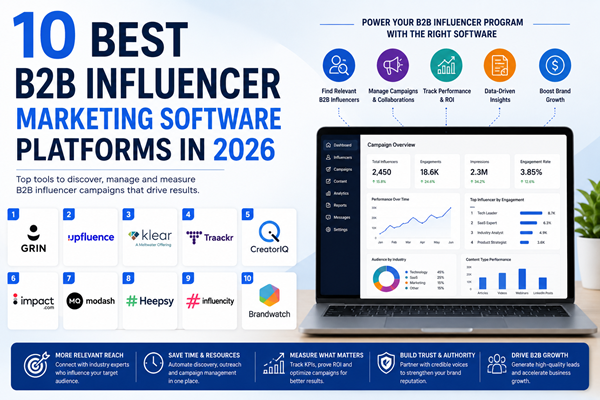
10 Best B2B Influencer Marketing Software Platforms in 2026
While there are dozens of influencer marketing platforms available today, only a handful are well suited for the longer sales cycles, relationship-driven strategies, and data requirements of B2B marketing. The platforms below stand out because they help businesses discover industry experts, manage long-term creator relationships, measure campaign ROI, and scale influencer programs efficiently.
1. CreatorIQ
CreatorIQ is widely regarded as one of the most comprehensive influencer marketing platforms for large organizations. Its AI-powered creator discovery, advanced audience analytics, workflow automation, and robust reporting capabilities make it a popular choice for enterprise marketing teams.
Unlike many influencer platforms that focus primarily on social media personalities, CreatorIQ enables brands to identify credible experts across multiple industries and build structured influencer programs. Large organizations running campaigns across different regions also benefit from its collaboration tools and extensive integrations.
Best for: Enterprise companies, global B2B organizations, technology brands
2. Traackr
Traackr has built its reputation around helping brands measure the real business impact of influencer marketing. Rather than focusing only on campaign management, the platform provides detailed analytics that connect influencer activities to measurable marketing outcomes.
It allows businesses to benchmark performance, compare campaigns, track budgets, and evaluate long-term creator relationships, making it particularly valuable for organizations that need data-driven reporting.
Best for: Enterprise marketing teams focused on analytics and ROI
3. Onalytica
Onalytica specializes in B2B influencer marketing and is one of the few platforms designed specifically for identifying industry experts rather than lifestyle influencers.
The platform helps businesses discover analysts, journalists, consultants, keynote speakers, researchers, and subject matter experts who influence purchasing decisions across professional industries.
It is particularly popular among technology companies, consulting firms, and enterprise software providers.
Best for: SaaS, technology, consulting, and professional services
4. Sprinklr Influencer Marketing
Sprinklr combines influencer marketing with customer experience management, social listening, and enterprise social media management.
Organizations already using Sprinklr for digital marketing can seamlessly integrate influencer campaigns into their existing workflows, making collaboration across departments much easier.
Best for: Large multinational organizations
5. GRIN
Although GRIN is widely known within the eCommerce industry, many B2B organizations also use it because of its excellent creator relationship management capabilities.
Instead of focusing solely on influencer discovery, GRIN helps businesses build long-term partnerships through centralized communication, campaign management, affiliate tracking, and workflow automation.
Best for: Companies prioritizing long-term influencer relationships
6. Aspire
Aspire offers a balanced combination of creator discovery, campaign management, content collaboration, product gifting, and reporting.
Its intuitive interface makes it accessible for growing B2B companies that need professional campaign management without the complexity often associated with enterprise software.
Aspire also supports user-generated content initiatives alongside influencer collaborations.
Best for: Mid-sized B2B businesses
7. Upfluence
Upfluence combines influencer marketing with affiliate marketing, customer relationship management, and sales attribution.
Businesses can identify existing customers who already advocate for their brand and turn them into long-term ambassadors, making the platform particularly effective for software companies and subscription-based businesses.
Best for: SaaS companies and recurring revenue businesses
8. Klear
Klear leverages artificial intelligence to help brands identify influencers whose audiences closely align with their target markets.
Its audience insights, demographic analysis, engagement metrics, and campaign reporting make it useful for B2B marketers looking for data-driven creator selection.
The platform also includes influencer CRM functionality for managing long-term relationships.
Best for: Data-driven marketing teams
9. Influencity
Influencity offers an affordable entry point for businesses beginning to invest in influencer marketing.
Its extensive creator database, audience analysis, campaign tracking, and reporting tools provide many of the capabilities found in premium platforms at a lower price point.
For smaller B2B companies with limited budgets, Influencity delivers excellent value.
Best for: Startups and SMBs
10. Meltwater Influencer Marketing
Meltwater extends beyond influencer marketing by combining media monitoring, social listening, PR analytics, and influencer management into one platform.
Organizations that manage both public relations and influencer marketing benefit from having all communication data available within a single system.
This makes it particularly attractive for brands that view influencers as part of their broader communications strategy rather than a standalone marketing channel.
Best for: PR agencies, communications teams, enterprise organizations
The Features That Matter Most in 2026
Not every influencer platform is suitable for B2B marketing. While many solutions excel at identifying Instagram or TikTok creators, B2B marketers require capabilities tailored to professional audiences.
The first priority is intelligent creator discovery. A strong B2B platform should make it easy to identify thought leaders based on expertise rather than popularity. Audience relevance, industry specialization, speaking engagements, published content, and professional credibility often matter far more than follower count.
Relationship management is equally important. Successful B2B influencer programs are built over months or years, not individual campaigns. The ability to document conversations, track previous collaborations, schedule follow-ups, and manage long-term partnerships is essential.
Analytics also play a larger role than many marketers realize. Decision-makers increasingly expect influencer programs to demonstrate measurable business value. Software that connects campaign activity with website traffic, lead generation, content engagement, and pipeline performance helps marketing teams justify continued investment.
Automation has become another defining characteristic of modern influencer platforms. Outreach sequences, content approvals, reporting, payment processing, and campaign reminders can now be handled automatically, allowing teams to spend more time developing strategy rather than completing repetitive administrative tasks.
AI Is Reshaping B2B Influencer Marketing
Artificial intelligence has rapidly become one of the most significant developments in marketing technology, and influencer marketing is no exception.
Leading B2B platforms now use AI to analyze creator relevance, recommend potential partnerships, detect fraudulent audience behavior, identify emerging industry voices, and forecast campaign performance.
These capabilities reduce the time required to identify suitable influencers while improving the quality of recommendations. Instead of relying solely on manual research, marketing teams can evaluate thousands of potential collaborators based on objective data.
However, AI is most effective when combined with human judgment. Trust, credibility, and authentic relationships remain at the heart of successful B2B influencer marketing. Software can identify opportunities, but experienced marketers still determine which partnerships make strategic sense.
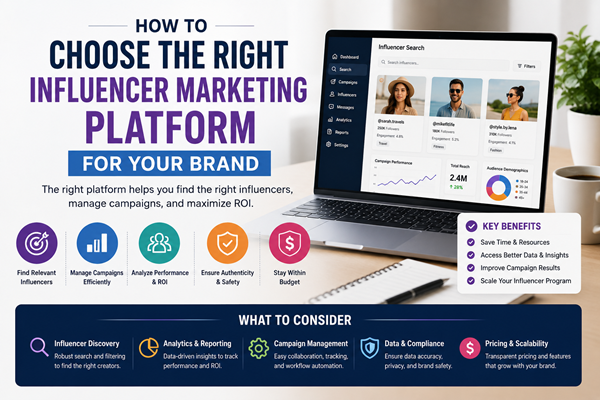
Choosing the Right Software for Your Organization
No platform is perfect for every business.
A startup launching its first influencer initiative will have very different requirements from a multinational technology company managing hundreds of creator relationships across multiple regions.
Smaller organizations often benefit from intuitive platforms with transparent pricing and streamlined workflows. Their focus is usually speed, affordability, and ease of implementation.
Mid-sized companies frequently require greater automation as influencer programs become more structured. Campaign management, reporting, workflow automation, and CRM integrations begin to deliver significant efficiency gains.
Enterprise organizations face a different challenge altogether. Large teams need scalable infrastructure, advanced user permissions, comprehensive analytics, compliance management, and integrations with existing marketing technology stacks. In these environments, choosing software becomes a strategic technology decision rather than simply purchasing another marketing tool.
Common Mistakes Companies Make
One of the biggest mistakes organizations make is choosing software based on feature lists instead of business objectives. A platform may advertise hundreds of capabilities, but only a fraction may be relevant to your actual marketing strategy.
Another common error is treating influencer marketing as a short-term campaign rather than an ongoing relationship-building initiative. The most successful B2B brands consistently collaborate with trusted industry voices over time, allowing credibility and audience trust to compound.
Companies also tend to underestimate implementation. Even the best software requires onboarding, training, process development, and internal adoption. Without clear workflows, technology alone cannot transform influencer marketing performance.
Looking Ahead
The future of B2B influencer marketing is unlikely to revolve around larger influencer databases or more automation alone. Instead, success will increasingly depend on deeper relationships, better data, and stronger integration with broader marketing strategies.
Influencer marketing is already becoming more closely connected with account-based marketing, content marketing, webinars, virtual events, podcasts, community building, and customer advocacy. The platforms that support these broader initiatives—rather than operating as isolated tools—will provide the greatest long-term value.
As artificial intelligence continues to evolve, marketers can expect even more sophisticated creator recommendations, predictive analytics, and workflow automation. Yet despite these technological advances, one principle will remain unchanged: people trust people more than brands.
Final Thoughts
B2B influencer marketing has evolved far beyond one-off sponsored posts or celebrity endorsements. It has become a strategic discipline centered on credibility, expertise, education, and long-term relationship building.
The right software enables organizations to scale these relationships without sacrificing authenticity. By combining intelligent creator discovery, workflow automation, analytics, and collaboration tools, modern influencer marketing platforms allow marketing teams to focus less on administration and more on creating meaningful partnerships that influence real business decisions.
Ultimately, the software itself is only part of the equation. Success comes from aligning technology with a clear strategy, choosing influencers whose expertise genuinely resonates with your audience, and measuring outcomes that contribute to long-term business growth. Organizations that embrace this approach will be better positioned to build authority, strengthen trust, and compete effectively in an increasingly relationship-driven B2B marketplace.