

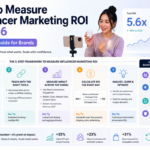




















































































































































































































































































































































































































































































































































































































































































































































































































































































































































































































































































































































































































































How to Measure Influencer Marketing ROI in 2026 (A Practical Guide for Brands)
Influencer marketing has matured into one of the most powerful digital channels for brands, but it has also created one of the most persistent challenges in marketing today—how do you actually measure ROI?
For years, influencer campaigns were judged using vanity metrics like likes, comments, shares, and follower growth. While these indicators can show engagement, they rarely tell the full story. A post might go viral, but if it doesn’t drive traffic, conversions, or revenue, its real business impact remains unclear.
In 2026, this gap between visibility and value has become impossible to ignore. Marketing teams are under increasing pressure to justify influencer budgets with concrete numbers. Whether you’re a startup running your first campaign or an enterprise managing dozens of creators across multiple markets, leadership teams now expect one thing above all else—measurable return on investment.
The good news is that influencer marketing ROI is not only measurable, it is becoming more precise thanks to advanced tracking tools, attribution models, and AI-powered analytics platforms. The challenge is knowing what to track, how to track it, and how to interpret the data correctly.
What Does ROI Actually Mean in Influencer Marketing?
Before measuring ROI, it’s important to understand what it represents in the context of influencer marketing.
At its simplest, ROI (Return on Investment) compares how much value you receive from a campaign versus how much you spend on it. But influencer marketing is rarely linear. A single campaign can impact brand awareness, customer trust, purchase intent, and long-term loyalty—all at the same time.
This makes ROI more layered than in traditional performance marketing. Instead of relying on a single metric, brands often need to evaluate a combination of direct and indirect outcomes.
Direct outcomes include measurable actions such as sales, sign-ups, downloads, or purchases. Indirect outcomes include brand awareness, audience growth, engagement quality, and sentiment improvement.
Both matter—but they need to be measured differently.
Step 1: Define Clear Campaign Objectives First
One of the biggest mistakes brands make is trying to measure ROI without clearly defining what success looks like.
Different influencer campaigns serve different purposes. A skincare brand launching a new product might focus on conversions and sales, while a SaaS company might prioritize lead generation or webinar sign-ups. A lifestyle brand might focus on engagement and reach during an awareness campaign.
Without defining objectives upfront, ROI becomes meaningless because there is no baseline for comparison.
Clear objectives also determine what kind of influencers you should work with. Micro influencers may be better for conversions, while macro influencers may be more effective for awareness.
Step 2: Track the Right Metrics (Not Just Vanity Numbers)
To measure ROI effectively, brands must go beyond surface-level engagement metrics.
Some of the most important performance indicators include website traffic generated from influencer links, conversion rates from tracked campaigns, cost per acquisition, revenue per influencer, and affiliate link performance.
For awareness-focused campaigns, metrics such as reach, impressions, engagement rate, video completion rate, and brand mentions can provide useful insights into visibility and audience response.
The key is to align metrics with campaign goals rather than tracking everything equally.
Step 3: Use Tracking Links and Discount Codes
One of the simplest and most effective ways to measure influencer ROI is through unique tracking links and promo codes.
By assigning each influencer a personalized URL or discount code, brands can directly attribute traffic and sales to specific creators. This method is especially useful for eCommerce and D2C brands where purchases happen online.
For example, if an influencer promotes a product using a code like “STYLE10,” every purchase using that code can be tracked back to their campaign. Similarly, UTM parameters can help track clicks, engagement sources, and conversion paths.
This level of tracking eliminates guesswork and provides clear performance data for each influencer.
Step 4: Calculate Cost vs Revenue Per Influencer
Once tracking systems are in place, ROI can be calculated more accurately.
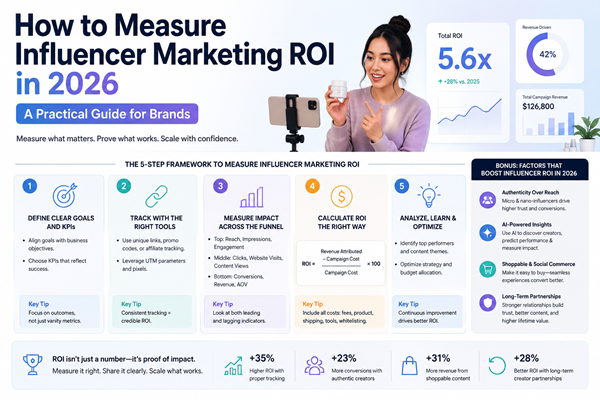
A simple formula often used is:
ROI = (Revenue Generated – Campaign Cost) ÷ Campaign Cost × 100
However, in influencer marketing, it’s also useful to evaluate performance at an individual creator level. Some influencers may generate high engagement but low conversions, while others may deliver strong revenue despite smaller audiences.
This insight helps brands optimize future campaigns by focusing on creators who deliver actual business results rather than just visibility.
Step 5: Measure Assisted Conversions
Not all influencer impact is immediate.
In many cases, users may discover a product through an influencer but complete the purchase days or even weeks later through a different channel such as Google search or direct website visits.
This is where assisted conversions become important. These track the role influencers play earlier in the customer journey, even if they are not the final touchpoint before purchase.
Modern analytics tools and attribution models help brands understand how influencer content contributes to multi-step buying journeys.
Step 6: Evaluate Content Performance Beyond Sales
While revenue is important, it should not be the only measure of success.
Influencer-generated content often continues to deliver value long after a campaign ends. A single video or post can keep generating views, engagement, and traffic for weeks or months.
Brands should evaluate how well influencer content performs organically, including metrics like evergreen views, shareability, audience sentiment, and content reuse potential.
Many companies now repurpose influencer content for ads, websites, and social media, further increasing ROI beyond the original campaign.
Step 7: Use Influencer Marketing Platforms for Accurate Attribution
Manually tracking influencer performance becomes difficult as campaigns scale. This is where influencer marketing platforms play a crucial role.
Modern platforms help brands centralize tracking, automate reporting, monitor real-time performance, and attribute revenue across multiple creators and channels.
They also provide deeper insights such as audience demographics, fake follower detection, engagement authenticity, and cross-platform performance comparison.
By using these tools, brands can move from guesswork to data-driven decision-making.
Step 8: Factor in Long-Term Value, Not Just Immediate Sales
One of the most overlooked aspects of influencer ROI is long-term brand impact.
A customer acquired through an influencer may continue purchasing from the brand over time, increasing their lifetime value significantly. Similarly, influencer campaigns can improve brand awareness and trust, which indirectly boosts performance across other marketing channels.
This means ROI should not be evaluated only on immediate returns but also on long-term customer value and brand equity growth.
Common Mistakes Brands Make When Measuring ROI
Despite access to advanced tools, many brands still struggle with accurate measurement.
One common mistake is focusing only on likes and impressions while ignoring conversion data. Another is failing to standardize tracking methods across influencers, making it difficult to compare performance.
Some brands also evaluate campaigns too early, before assisted conversions or delayed purchases have fully materialized.
Avoiding these mistakes is essential for building a realistic understanding of influencer performance.
Final Thoughts
Measuring influencer marketing ROI in 2026 is far more advanced than it was just a few years ago, but it still requires the right combination of strategy, tools, and patience.
The most successful brands no longer treat influencer marketing as a branding experiment—they treat it as a performance-driven channel that can be tracked, optimized, and scaled.
True ROI is not just about immediate sales. It includes awareness, engagement quality, customer trust, long-term loyalty, and the ability of influencer content to continue generating value over time.
Brands that understand this full picture—and invest in the right tracking systems—will be able to transform influencer marketing from a cost center into one of their most powerful growth engines.